
Saffron
Crocus sativus
The hand-picked stigma of an autumn crocus, the most labour-intensive spice in the world and a subject of growing clinical interest.
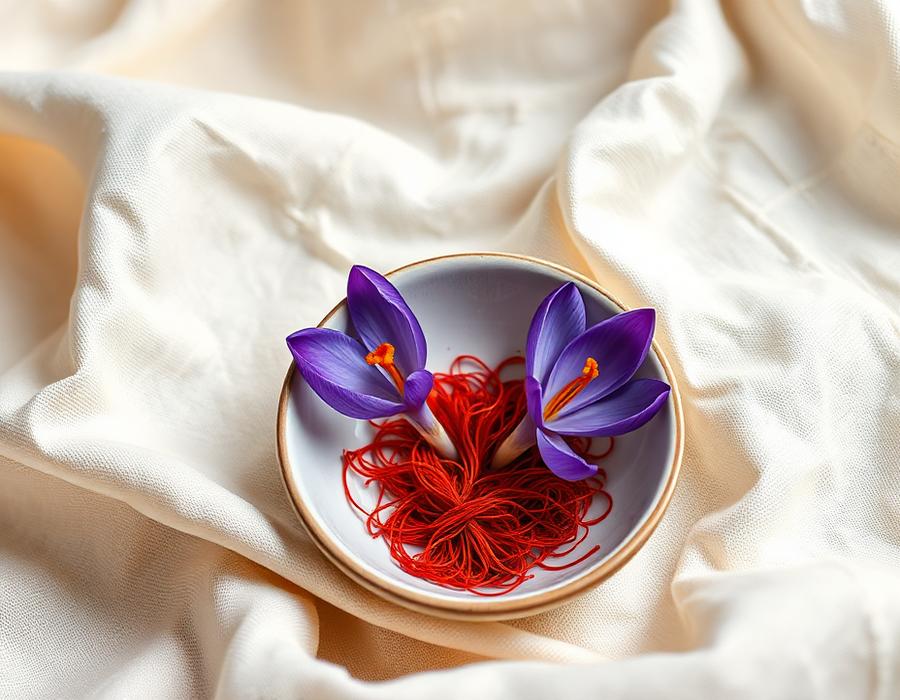
- Common name
- Saffron
- Scientific name
- Crocus sativus
- Family
- Iridaceae
- Plant part
- Stigma
- Native region
- Iran, Kashmir, Mediterranean
- Traditional systems
- European, Middle Eastern
Botanical classification
A sterile triploid crocus of the Iridaceae, propagated by corm. Each flower yields three stigmas.
Origin & traditional use
Cultivated since the Bronze Age across Persia and the eastern Mediterranean, used as both a culinary spice and a medicinal preparation.
Modern scientific perspective
Crocin, crocetin and safranal are the characterised constituents. Saffron has attracted a comparatively large number of controlled human trials for a spice, particularly on mood.
Evidence snapshot
Long culinary and medicinal record. Constituents well defined. Human evidence relatively strong for a botanical, though trials are typically small.
Proposed mechanisms
Crocin and safranal have been studied in relation to monoamine signalling.
- Antioxidant capacityAssessed in laboratory assays for free-radical scavenging.
Key active constituents
- Crocin
- Crocetin
- Safranal
- Picrocrocin
Safety & considerations
Used in small amounts. Adulteration is common; provenance matters.
- Contraindications
- High doses are not advised.
- Drug interactions
- Consider guidance alongside antidepressant medication.
- Pregnancy
- Avoid medicinal amounts.
- Breastfeeding
- Avoid medicinal amounts.
- Medication interaction. If you take prescription medication, speak with your healthcare provider before use.
References
- 01 Dietary Supplement Label Database. Office of Dietary Supplements, National Institutes of Health, 2024 — Government ResourceSource
Related botanicals
These statements have not been evaluated by the Food and Drug Administration. This product is not intended to diagnose, treat, cure, or prevent any disease.