
Ancient botanicals · Modern intimacyComplimentary shipping on orders over $75The ritual begins before the momentPair Tantra + Alpha in the Ritual PairSmall batch · Independently tested by lotAncient botanicals · Modern intimacyComplimentary shipping on orders over $75The ritual begins before the momentPair Tantra + Alpha in the Ritual PairSmall batch · Independently tested by lot
Akasha

Ingredient Library

A working reference, kept openly.

For each ingredient we record four things: where it grows, how it has traditionally been used, which naturally occurring plant compounds it carries, and what modern research has found interesting about it. Where the evidence is preliminary, we say so.

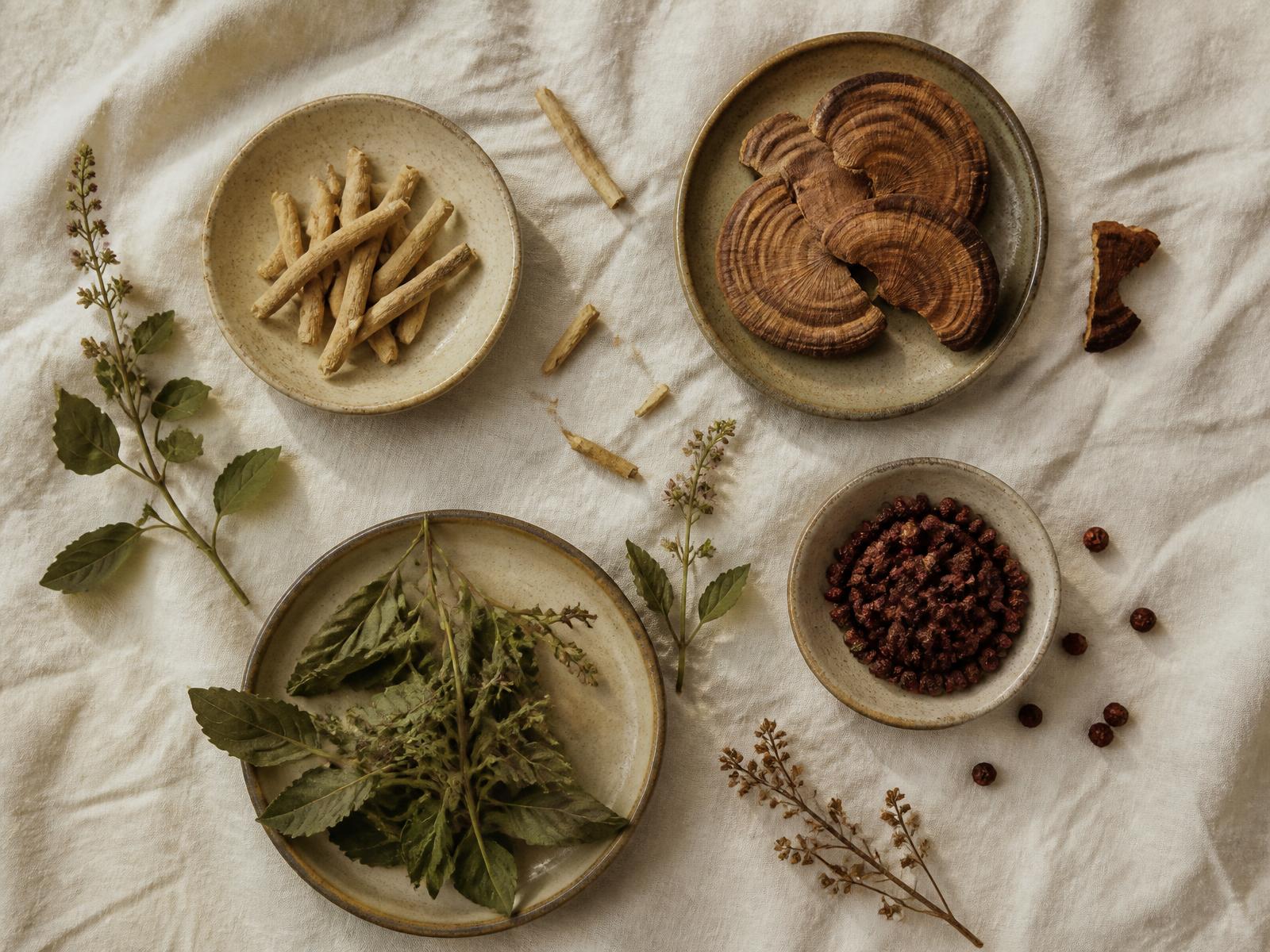
Dried roots, reishi and turmeric on linen fabric

Botanicals

Herbs, roots and leaves

Shatavari

Asparagus racemosus

A climbing asparagus native to the Indian subcontinent. Traditionally used in Ayurvedic practice as a nourishing tonic for women, it is studied today for its steroidal saponins, known as shatavarins, and its adaptogenic profile.

Botanical originTraditional usePlant compoundsScientific interestSourcing

Butea Superba

Butea superba

A woody vine from the forests of Thailand, where the root has a long history of traditional use in men's herbal preparations. Modern interest centres on its flavonoids and flavonoid glycosides.

Botanical originTraditional usePlant compoundsScientific interestSourcing

Black Maca

Lepidium meyenii

A cruciferous root cultivated above 4,000 metres in the Peruvian Andes for more than two millennia. Traditionally eaten as a staple food, it is studied for naturally occurring macamides and glucosinolates.

Botanical originTraditional usePlant compoundsScientific interestSourcing

Cynomorium

Cynomorium songaricum

Known as desert thumb, this parasitic desert plant appears in classical Chinese and Arabic herbal texts. Contemporary research examines its polyphenols, flavonoids and triterpenes.

Botanical originTraditional usePlant compoundsScientific interestSourcing

Black Ginger

Kaempferia parviflora

A rhizome from northern Thailand, traditionally prepared as an infusion by highland communities. It is of scientific interest for its methoxyflavones, a distinctive group of plant compounds.

Botanical originTraditional usePlant compoundsScientific interestSourcing

Senna Leaf

Senna alexandrina

A desert shrub documented in Arabic herbal medicine since the ninth century. Its leaves contain sennosides, naturally occurring compounds long studied for their role in supporting regularity. Intended for short-term, occasional use.

Botanical originTraditional usePlant compoundsScientific interestSourcing

Red Ginseng

Panax ginseng

Korean ginseng root, steamed and dried in a method refined over centuries. A cornerstone adaptogen of East Asian herbalism, it remains among the most researched botanicals for its ginsenosides.

Botanical originTraditional usePlant compoundsScientific interestSourcing

Minerals

Drawn from stone and sea

Zeolite

Clinoptilolite

A crystalline mineral formed where volcanic ash meets seawater. Its honeycomb lattice carries a natural negative charge, a structure studied in materials science and, more recently, in nutrition research.

Botanical originTraditional usePlant compoundsScientific interestSourcing

Diatomaceous Earth

Diatomite

A soft sedimentary mineral composed of the fossilised silica shells of diatoms, single-celled algae laid down over millennia in ancient lake and sea beds. Food-grade diatomite is valued for its naturally occurring silica and its fine, porous structure.

Botanical originTraditional usePlant compoundsScientific interestSourcing

Ingredient information is provided for educational purposes and describes traditional use and areas of scientific interest. These statements have not been evaluated by the Food and Drug Administration. These products are not intended to diagnose, treat, cure, or prevent any disease.