
Tribulus
Tribulus terrestris
A low-growing annual of dry ground, present in both Ayurvedic and traditional Chinese materia medica.
- Common name
- Tribulus
- Scientific name
- Tribulus terrestris
- Family
- Zygophyllaceae
- Plant part
- Aerial parts and fruit
- Native region
- Mediterranean basin, South Asia, Africa
- Traditional systems
- Ayurveda, Traditional Chinese Medicine
Botanical classification
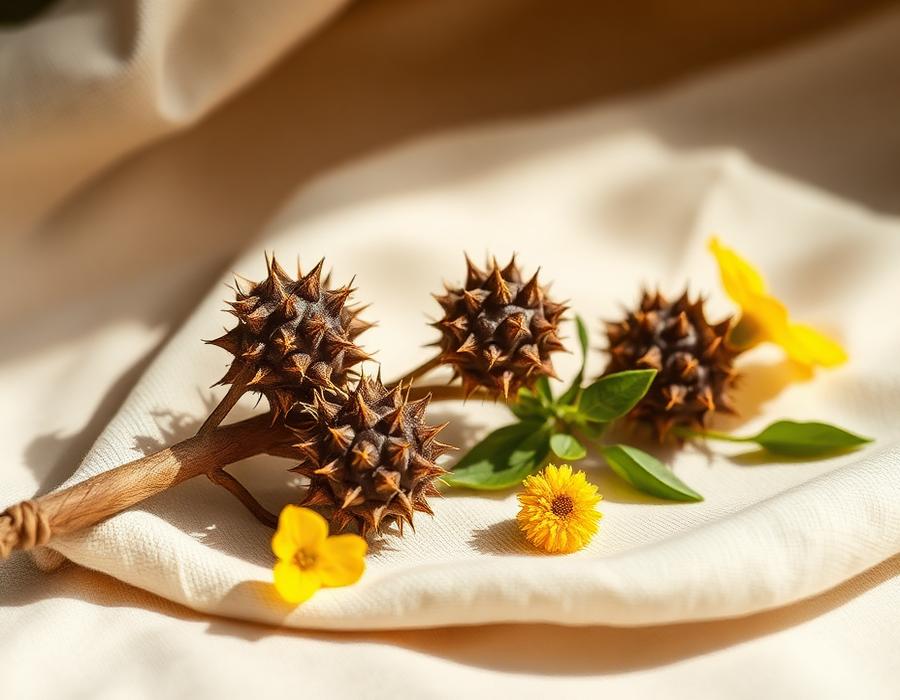
A prostrate annual of the Zygophyllaceae, recognised by its spiny fruit. Saponin content varies markedly by growing region.
Origin & traditional use
Known as gokshura in Ayurveda and bai ji li in Chinese practice, the dried fruit was traditionally decocted.
Modern scientific perspective
Protodioscin is the marker saponin most often quantified. Findings vary considerably between studies, in part because plant material differs so widely by origin.
Evidence snapshot
Documented in two traditional systems. Constituent content highly variable by source. Human evidence inconsistent.
Proposed mechanisms
Steroidal saponin signalling is the pathway usually proposed.
- Steroidal saponin activityA class of plant compounds under investigation for endocrine-adjacent signalling.
Key active constituents
- Protodioscin
- Steroidal saponins
- Flavonoids
Safety & considerations
Source and standardisation matter more than usual with this plant.
- Contraindications
- Prostate conditions warrant professional guidance.
- Drug interactions
- Not well characterised.
- Pregnancy
- Avoid.
- Breastfeeding
- Avoid.
- Adults only. Formulated for adults. Keep out of reach of children.
References
- 01 Dietary Supplement Label Database. Office of Dietary Supplements, National Institutes of Health, 2024 — Government ResourceSource
Related botanicals
These statements have not been evaluated by the Food and Drug Administration. This product is not intended to diagnose, treat, cure, or prevent any disease.