
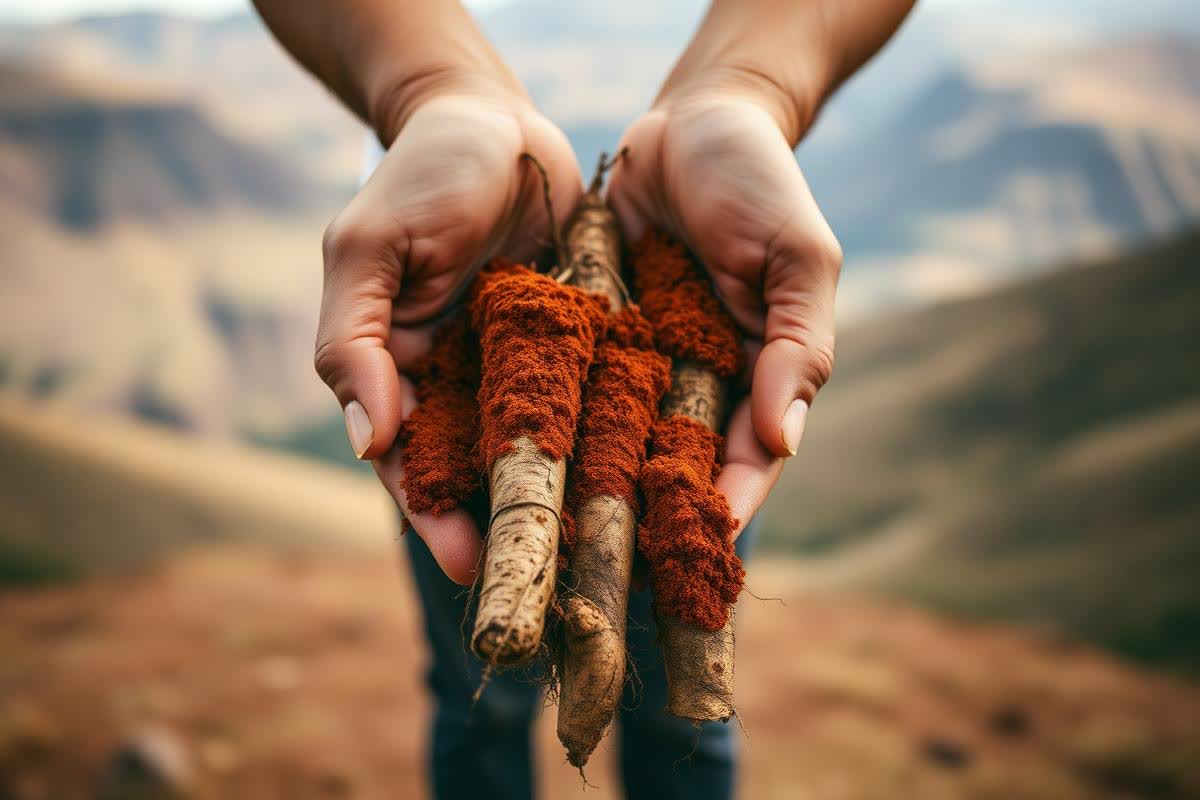
At four thousand metres, the growing season is short and the drying takes weeks. Notes from the Junín plateau.
- Author
- Akasha Editorial
- Reviewed by
- Akasha Review Board
- Published
- 2025-10-24
- Updated
- 2025-10-24
- Evidence reviewed
- 2025-10-24
The Junín plateau sits above four thousand metres, where frost is a nightly event and the air holds little. Maca has been cultivated here since before the Inca, and the method has not changed much.
The hypocotyls are lifted by hand and left in the open for several weeks, freezing at night and thawing by day. Growers describe this as what makes the root usable; the chemistry supports them, since the drying period alters the constituent profile substantially.
Colour is sorted at harvest. Cream, red and black roots grow intermingled in the same field and are separated by hand afterwards, which is why phenotype-specific research is harder to conduct than it sounds.
We buy black maca by lot, recorded to the field and the harvest month.
Referenced botanicals
References
- 01 Lepidium meyenii (maca): a review of its traditional use and phytochemistry. Various, Journal of Ethnopharmacology, 2020
Continue reading
- The Alchemy of Intimacy: sacred sexuality, presence and the art of connectionA slow look at intimacy as ritual — presence, breath, touch, and the long relationship between botanicals and sensual practice.

- When Intimacy Feels Different: supporting a partner through erectile difficultyOccasional erectile difficulty is common. A calm, compassionate look at pressure, presence, and how couples can stay connected when the body responds differently.

- Semen Retention & Sexual Energy: ancient wisdom for modern menTaoist, yogic and Ayurvedic traditions treated sexual energy as something to cultivate. A grounded look at retention, transmutation, and what the practice actually asks of you.
These statements have not been evaluated by the Food and Drug Administration. This product is not intended to diagnose, treat, cure, or prevent any disease.