
Acerola Cherry
Malpighia emarginata DC.
Also known as Barbados Cherry or West Indian Cherry, this small crimson fruit is one of nature's richest natural sources of vitamin C, alongside polyphenols, carotenoids, anthocyanins and other phytonutrients held within a natural whole-food matrix.
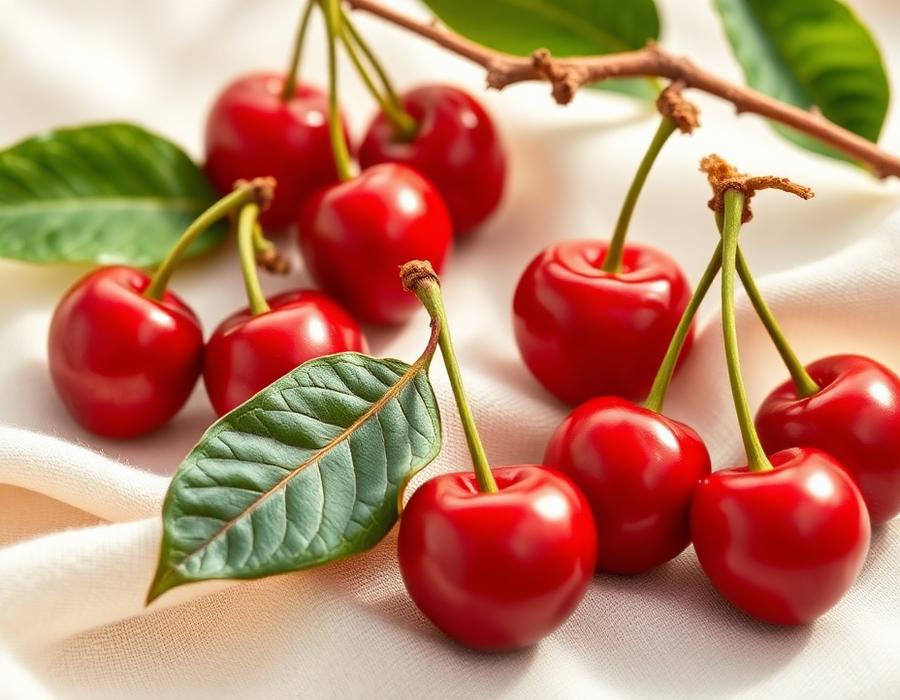
- Common name
- Acerola Cherry
- Scientific name
- Malpighia emarginata DC.
- Family
- Malpighiaceae
- Plant part
- Fruit
- Native region
- Caribbean, Central America, northern South America
Botanical classification
Family Malpighiaceae · Genus Malpighia · Species Malpighia emarginata · Plant part: fruit · Preparation: freeze-dried fruit powder.
Origin & traditional use
Native to the Caribbean, Central America and South America, where it has historically been consumed fresh, juiced or dried as a nutrient-dense food.
Modern scientific perspective
Studied for its vitamin C content and phytonutrients including flavonoids, carotenoids, anthocyanins and polyphenols. Vitamin C is an essential nutrient that contributes to normal collagen formation, normal immune function and the protection of cells from oxidative stress. Why we selected it: it contributes naturally occurring vitamin C alongside a diverse spectrum of whole-fruit plant compounds. Quality philosophy: freeze-dried fruit powder rather than isolated ascorbic acid, preserving the whole-food matrix. Akasha perspective: nutrition as it appears in the fruit. Note: if a finished product provides enough vitamin C to meet labelling thresholds and the Supplement Facts panel reflects it accurately, authorised nutrient content and structure-function claims permitted under FDA regulations may also apply — verify the actual amount per serving before use.
Evidence snapshot
Traditional use: consumed for centuries across the Caribbean and South America. Preclinical research: studies on its antioxidant compounds. Human research: recognised as one of the top natural food sources of vitamin C. Scientific consensus: its nutritional composition is widely recognised.
Proposed mechanisms
Vitamin C and accompanying polyphenols are the constituents most frequently examined.
Key active constituents
- Vitamin C (ascorbic acid)
- Anthocyanins
- Flavonoids
- Carotenoids
- Polyphenols
- Phenolic acids
- Natural antioxidants
- Trace minerals
Safety & considerations
Long history as a food and generally well tolerated. Discontinue use if unexpected sensitivity occurs. These statements have not been evaluated by the Food and Drug Administration. This product is not intended to diagnose, treat, cure, or prevent any disease.
- Contraindications
- Consult a healthcare professional if managing a medical condition.
- Drug interactions
- Consult a healthcare professional if taking medications.
- Pregnancy
- Consult a healthcare professional before use if pregnant.
- Breastfeeding
- Consult a healthcare professional before use if nursing.
- Pregnancy and nursing. Not intended for use during pregnancy or while nursing. Speak with your healthcare provider.
- Medication interaction. If you take prescription medication, speak with your healthcare provider before use.
References
- 01 Vitamin C — Health Professional Fact Sheet. NIH Office of Dietary Supplements, NIH ODS, 2021 — Fact sheetSource
- 02 Acerola (west indian cherry), raw. USDA, FoodData Central, 2019 — DatabaseSource
- 03 The acerola fruit: composition, productive characteristics and economic importance. Mezadri T et al., Comprehensive Reviews in Food Science and Food Safety, 2008 — ReviewSource
Related journal articles
- Understanding the G-Zone: a guide to arousal, pleasure & deeper intimacyThe G-zone is not a hidden button. It is part of a larger network of arousal, anatomy, and presence. A grounded, educational guide to exploring pleasure with curiosity instead of pressure.
- The Female Arousal Response: What Happens When the Body AwakensFemale arousal isn't a simple switch. A grounded look at what actually happens in the body—blood flow, erectile tissue, the nervous system, and why patience matters.
- Ancient Chinese Wisdom for Sexual Vitality: Jing, Qi & the Art of Cultivating EnergyWhat if sexual wellness wasn't viewed as something separate from the rest of your health? For thousands of years, traditional Chinese philosophy has approached vitality through a broader lens—energy, rest, movement, food, emotion, sexuality, age, and the changing rhythms of the body. At the center of these teachings are Jing and Qi, two concepts that offer a fascinating glimpse into an ancient philosophy of cultivation.
- Ayurveda, the Kama Sutra & the Three Doshas: Understanding Your Intimate EnergyWhat if understanding your intimate nature began with understanding your energy? Long before modern conversations about compatibility, libido, and love languages, ancient Indian traditions were exploring the relationship between body, temperament, desire, and connection.
These statements have not been evaluated by the Food and Drug Administration. This product is not intended to diagnose, treat, cure, or prevent any disease.