
Rhodiola
Rhodiola rosea
A succulent of cold northern latitudes, gathered in Scandinavia and Siberia and studied since the mid-twentieth century.
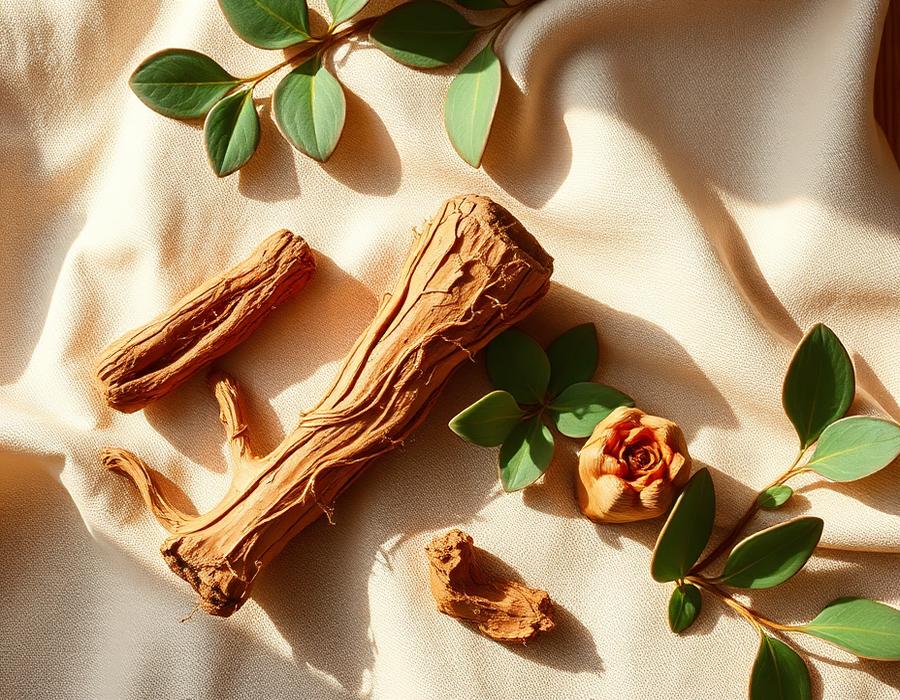
- Common name
- Rhodiola
- Scientific name
- Rhodiola rosea
- Family
- Crassulaceae
- Plant part
- Root
- Native region
- Arctic and alpine Europe, Siberia
- Traditional systems
- European
Botanical classification
A perennial of the Crassulaceae growing in rocky arctic and alpine ground; the thick rhizome is the part collected.
Origin & traditional use
Recorded in Scandinavian and Russian folk practice, and later the subject of sustained Soviet-era research into physical and mental endurance.
Modern scientific perspective
Rosavins and salidroside are the marker compounds. The human literature is moderate in volume and mixed in quality, with variable extract standardisation across studies.
Evidence snapshot
Traditional use documented. Marker compounds established. Human studies present but methodologically uneven.
Proposed mechanisms
Adaptogenic modulation of stress-response signalling is the pathway most often described.
- Adaptogenic activityStudied for a non-specific influence on the body's response to everyday stressors.
- HPA axis modulationStudied in relation to the hypothalamic-pituitary-adrenal signalling cascade.
Key active constituents
- Rosavin
- Salidroside
- Tyrosol
Safety & considerations
Often taken in the morning; some find it activating later in the day.
- Contraindications
- Bipolar spectrum conditions warrant professional guidance.
- Drug interactions
- Consider guidance alongside antidepressant medication.
- Pregnancy
- Not recommended.
- Breastfeeding
- Not recommended.
- Medication interaction. If you take prescription medication, speak with your healthcare provider before use.
References
- 01 Rhodiola rosea: a systematic review of human studies. Various, Phytomedicine, 2020 — Systematic Review
- 02 Adaptogens: a review of the concept and its evidentiary basis. Various, Pharmaceuticals, 2018 — Systematic Review
Related botanicals
These statements have not been evaluated by the Food and Drug Administration. This product is not intended to diagnose, treat, cure, or prevent any disease.